





Empowering Midwife Leaders: Batch 2 of the Midwifery Leadership Program Successfully Equips Midwife with Leadership Skills to Transform Maternal and Child Health Services
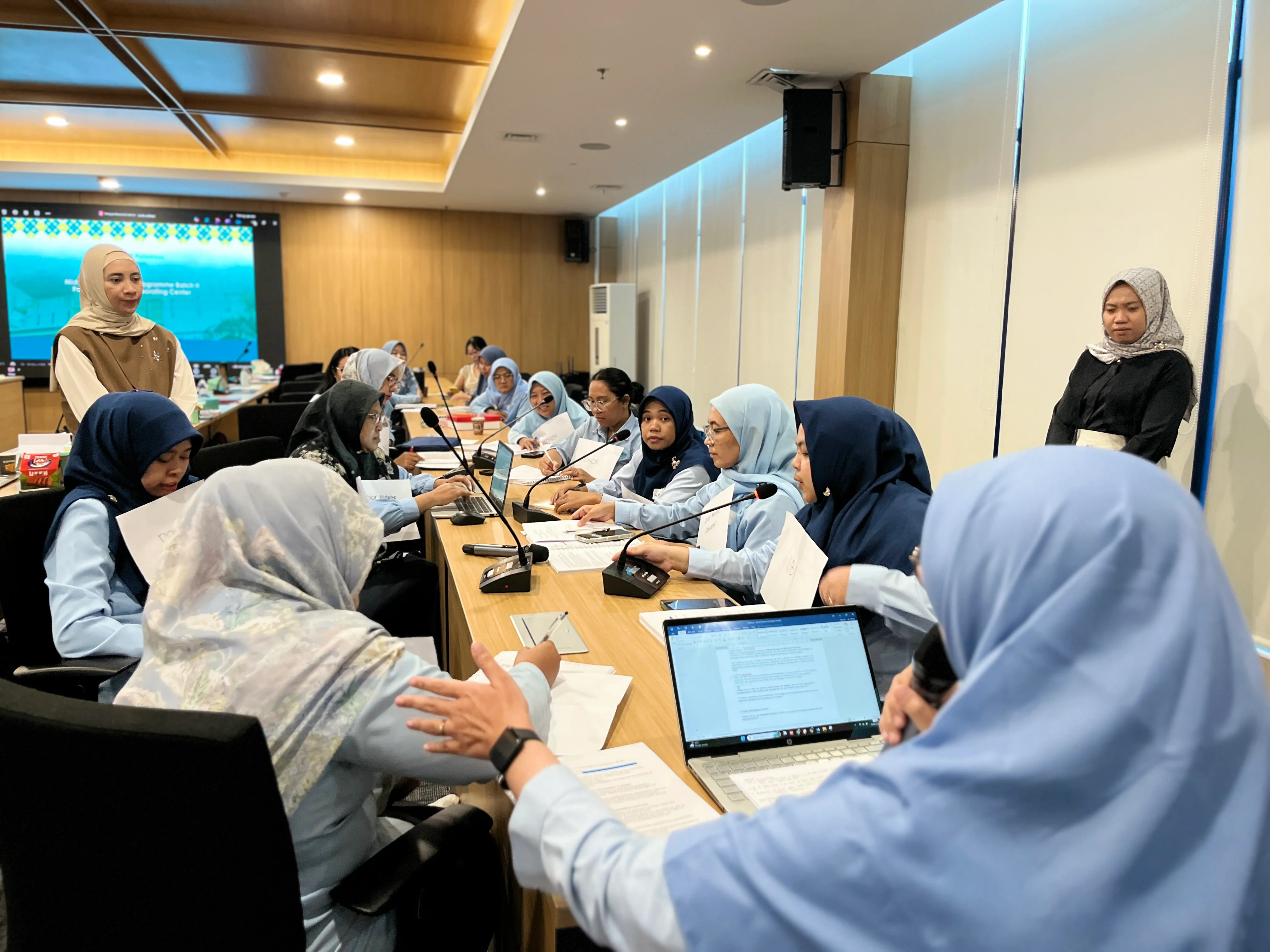
Poltekkes WHO Collaborating Center under the coordination of the Directorate General of Health Human Resources, organized the second batch of the Midwifery Leadership Program. This initiative is a strategic effort to strengthen the capabilities and leadership of midwifery educators. Implemented in collaboration with WHO Indonesia and the WHO Regional Office, this leadership strengthening program also directly supports one of the four key objectives of the Global Strategic Directions for Nursing and Midwifery 2021–2025.
The second batch of the Midwifery Leadership Program was successfully conducted from 18-22 August 2025 at the building of the Directorate General of Health Human Resources. This intensive training brought together 18 midwifery educators from Ministry of Health Polytechnic Institutes (Poltekkes) across Indonesia. This program is a direct continuation of the first batch, which was held in July 2025, demonstrating a sustained commitment by Poltekkes WHO Collaborating Center to invest in the foundational pillars of the health system.
All participants received an intensive five-day training session from Ai Tanimizu, Technical Officer for Nursing and Midwifery at the WHO Regional Office for South-East Asia. Furthermore, the program was strengthened by the involvement of three co-facilitators from Poltekkes Jakarta III, Poltekkes Semarang, and Poltekkes Pontianak, all of whom were distinguished graduates of the program's first batch. The training was rigorously designed around the WHO Midwifery Leadership Framework, encompassing five core modules: Understanding Leadership in Midwifery, Evidence and Communication in Midwifery, Identifying Policy Gaps and Strategic Planning, Implementing the National Midwifery Action Plan, and also Monitoring and Evaluation. The curriculum was highly experiential, moving beyond theory to include hands-on practice and real-world scenario application. Through dynamic discussion and brainstorming sessions, participants were challenged to think critically and develop innovative solutions aimed at strengthening and modernizing the midwifery sector within the national health system.
“It is time for them to implemented, to advocate for woman and also share the knowledge” said Ai Tanimizu as the facilitator.
This initiative, focused on creating "leaders who can fix the system," utilizes a cascading training model that ensures knowledge is continuously passed down. Graduates from the first batch returned as co-facilitators for the second, creating a sustainable cycle of empowerment. This ensures the program is a direct, long-term investment in developing strong, savvy midwifery leaders committed to solving the complex challenges in maternal and child health.
Demonstrating a strong commitment to strengthening the entire health workforce, this model of leadership development will be extended to nursing. Through the collaboration with the Poltekkes WHO Collaborating Center, a similar strengthening program for nursing professionals named the Nursing Clinical Instructor (NCI) program will be launched. This expansion underscores a powerful, unified strategy to fortify Indonesia's health system at its core by building a critical mass of empowered midwives and nurses.
(WHO CC/Written by Az Zahra Nur Ainiyyah)