





Elevating nursing and midwifery: WHO and Indonesia launch new Collaborating Centre to boost capacity in Indonesia and the Western Pacific Region
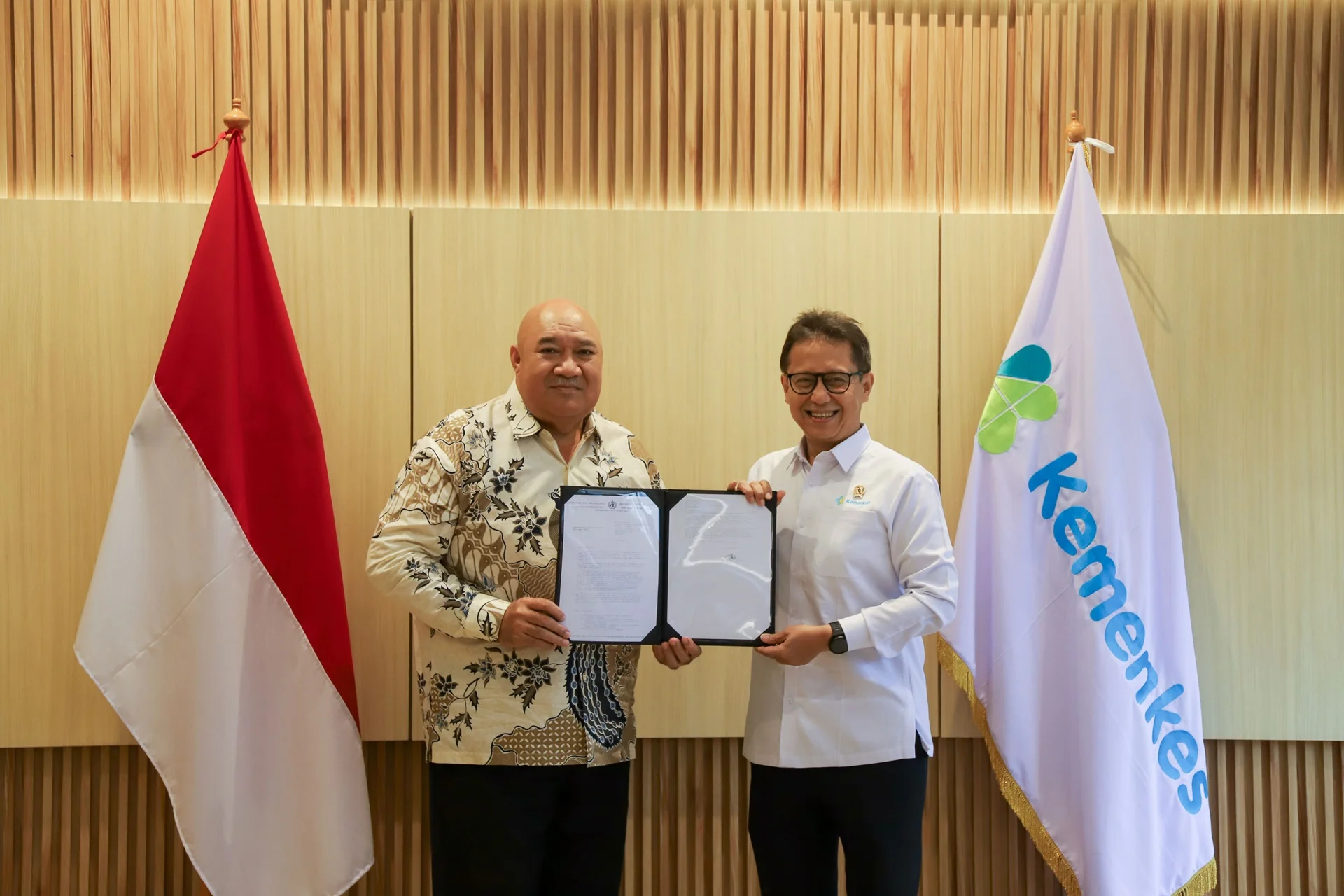
The Ministry of Health of the Republic of Indonesia and the World Health Organization (WHO) today marked a major milestone in strengthening health workforce development with the official designation of Indonesia’s Health Polytechnic Network (Poltekkes) as a WHO Collaborating Centre for Nursing and Midwifery Education and Development.
The event was held during the first official visit to Indonesia by Dr Saia Ma’u Piukala, WHO Regional Director for the Western Pacific, following Indonesia’s reassignment from the WHO South-East Asia Region to the Western Pacific Region in May.
Dr Piukala joined His Excellency Budi Gunadi Sadikin, Minister of Health of Indonesia, senior officials from the Ministry of Health, and WHO Representative to Indonesia Dr N. Paranietharan for the launch ceremony in Jakarta.
“Indonesia is proud that Poltekkes has been designated as a WHO Collaborating Centre (WHO CC) – a recognition of our commitment to advancing nursing and midwifery education,” said Minister Sadikin. “This marks a new chapter in our collaboration with WHO and reflects our ambition to strengthen health systems through skilled, empowered health workers. By investing in the education and leadership of nurses and midwives, we aim to improve care across Indonesia and contribute to a stronger health workforce throughout the region.”
With 38 campuses across 33 provinces nationwide, Poltekkes plays a central role in producing Indonesia’s health professionals – particularly nurses, midwives and allied health workers – who serve in primary health care centres and facilities across the country. Its designation as a WHO Collaborating Centre reflects both its national leadership in health workforce development and its growing role in regional cooperation, including through South-South training initiatives with Pacific Island countries.
"This is an important moment both for Indonesia and for the Western Pacific Region,” said Dr Piukala. “As Indonesia takes on its new role in the Western Pacific, Poltekkes is showing how national experience can strengthen regional capacity and advance nursing and midwifery education for the benefit of all. This is exactly what we mean when we speak of weaving health for families, communities and societies."
The WHO Collaborating Centre will focus on two priority areas:
· Supporting WHO in delivering accredited clinical instructor training programmes for nurses and midwives to improve the quality and consistency of pre-service education.
· Supporting WHO in advancing midwifery leadership development with a focus on education, policy and service quality.
Since 2022, WHO and Poltekkes have developed 50 international class modules, trained 50 lecturers across 24 campuses, and provided intensive coaching to improve teaching quality at pilot campuses in Medan, Yogyakarta, Surabaya and Pontianak. This has helped Indonesia maintain a skilled health workforce density above the WHO minimum threshold of 44.5 doctors, nurses and midwives per 10 000 population, while improving workforce competencies and training.
The inaugural activity under the new WHO Collaborating Centre – the Midwifery Leadership Programme – officially opened this week in Jakarta and brings together 20 midwifery faculty members from Poltekkes to strengthen leadership capacity in maternal and newborn health.
Since 2000, Indonesia has reduced maternal mortality from 311 to 140 per 100 000 live births and under-five mortality from 52 to 21 per 1000 live births, meeting the 2030 Sustainable Development Goals (SDG) target for under-five mortality and reaching the upper threshold for maternal mortality. However, further reductions are needed to meet the full maternal health target, which calls for a two-thirds reduction from 2010 levels.
“Indonesia’s progress in reducing maternal mortality is a major achievement, but too many women and newborns – especially in underserved areas – still face preventable risks,” said WHO Representative Dr Paranietharan. “This new Collaborating Centre will strengthen midwifery leadership and education both in Indonesia and across the region, helping close remaining gaps and accelerate efforts to reach the SDG targets.”
Demonstrating its immediate commitment to these goals, the Poltekkes WHO CC successfully conducted the second batch of its Midwifery Leadership Program from 18-22 August 2025. The intensive training brought together 18 midwifery educators from across Indonesia to strengthen their leadership capacities in line with the WHO Global Strategic Directions. The program, supported by experts from the WHO Regional Office, equipped participants with advanced skills in policy analysis, strategic planning, and evidence-based advocacy to directly improve maternal and newborn health outcomes.
Further strengthen its role, WHO CC convened Public Introduction and Poltekkes Partners Meeting on August 20, 2025. The event served as a platform to formally introduce the centre’s mandate to key stakeholders, including government bodies, educational institutions, and international partners. This gathering was crucial for aligning strategies, fostering collaboration, and building a cohesive network to amplify the centre's impact in the region.
Further discussions between the Ministry of Health and WHO are planned to develop the next phase of Collaborating Centre activities, including accredited clinical instructor training programmes for nurses and midwives to support quality improvements across pre-service education.
Building on this momentum, the Poltekkes WHO Collaborating Centre will launch a Nursing Competency Initiative (NCI) aimed at elevating the clinical mentoring skills of nurses. To maximize its impact and foster regional collaboration, we are extending an invitation to member countries of the WHO Western Pacific Regional Office (WPRO) to participate in this pivotal program. This initiative marks a significant step forward in our commitment to strengthening the regional nursing workforce and improving health outcomes across the Western Pacific.